

Production Scheduling Misalignment
Production planners struggle to align customer orders with machine availability, current capacity, routing schedules, and shift planning.
Our manufacturing order management software streamlines order processing, production coordination, inventory, and dispatch without manual follow-ups.
 ERP & Inventory Integrations
 Production Visibility
 Real-time order tracking
 Workflow automation
Your production team uses spreadsheets, inventory uses an ERP platform, and dispatch uses emails to communicate. Different departments using different systems lead to a disconnected operational environment.
We know you'd likely want everything to run smoothly, but it doesn't. Your operational teams face these practical challenges.
Production planners struggle to align customer orders with machine availability, current capacity, routing schedules, and shift planning.

A released order means nothing if raw materials, purchased components, or subassemblies are unavailable on the shop floor.

Sales teams, warehouse teams, and production supervisors frequently depend on manual updates to track the status of manufacturing orders.

Dispatch teams wait for production confirmations, packaging updates, batch approvals, or warehouse clearances before shipment planning.

You still struggle to track how a manufacturing order moves through planning, production, dispatch, and final delivery without having to refer to multiple systems.
Manufacturing order management software (OMS) centralizes these workflows within a single operational environment.
Your factory teams spend less time chasing updates across departments.
An OMS isn't a fancy tool for recording your orders. It helps ease:
Here's how manufacturing order management software helps reduce operational gaps for your factory.
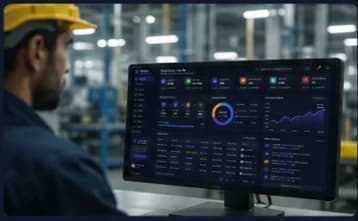
Your teams can align production orders with machine capacity, routing schedules, work centers, and shift planning without relying on disconnected spreadsheets.
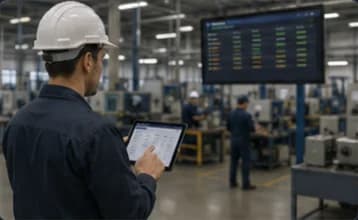
Production supervisors and operational teams can monitor manufacturing workflows, production stages, and pending operations through one connected system.
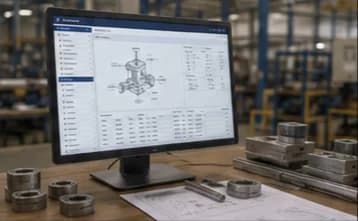
Your operational teams can access bill of materials (BOM), routing structures, work instructions, and production sequences directly in the OMS.

Your teams can integrate with ERP, procurement, inventory, CRM, accounting, and reporting systems to improve operational continuity.
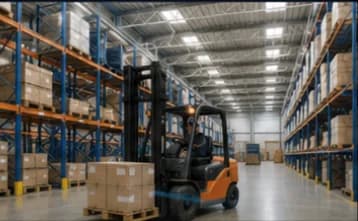
You can manage operations across multiple plants, warehouses, production units, and dispatch locations with a single centralized software platform.
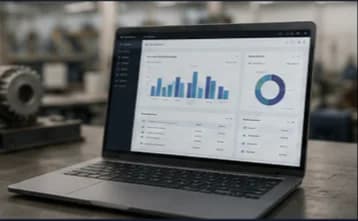
Your teams get better visibility into production status, material shortages, work-in-progress (WIP), dispatch timelines, and operational performance through dashboards and reports.
Let's talk about how connected software can simplify your operational environment.
Discuss OMS RequirementsAt MFG Software Lab, we choose scalable, operationally reliable technologies over complicated, flashy tools. Our team understands production workflows, shop floor coordination, and inventory visibility. So, we use technologies that you won't need to re-evaluate later.


These technologies build responsive interfaces for production planners, warehouse teams, dispatch managers, supervisors, and manufacturing coordination.




We develop secure systems that support manufacturing order workflows and production scheduling using these tools.



Our team integrates manufacturing order management software with ERP, procurement, inventory, accounting, CRM, and operational platforms.



These databases help manage production orders, BOM structures, inventory records, routing data, dispatch activity, and other critical functions.


These technologies synchronize manufacturing order management software with MES platforms, ERP systems, and third-party operational tools.
This tech stack helps your factory by addressing disconnected systems and unnecessary coordination overhead.
Choose The Right Software Architecture For Your PlantThe global OMS market is poised to grow at 12.1% annually. So, it's clear that many businesses are prioritizing operations management with custom tools.
Here are some critical factors for decision-makers to consider when planning an OMS implementation.
Backed by over 20 years of software expertise, our dedicated manufacturing developers have worked on OMS projects for global clients.
Get In Touch To Know MoreWe aim to improve production coordination without disrupting your day-to-day manufacturing operations. Here's a look at our stepwise development approach.

We Study:

We Define:

We Build With:

We Launch With:
Ready to explore more? Let's discuss the operational gaps and manufacturing processes you want to simplify.

Manufacturing Order Management Software (OMS) is a platform that helps factories manage the entire lifecycle of a production order — from order entry and planning through production tracking, inventory allocation, dispatch, and reporting — inside a single connected system.
An ERP covers finance, HR, procurement, and many other business processes. An OMS focuses specifically on the production and order workflow — orders, BOMs, routings, work centers, and dispatch — and typically integrates with your existing ERP rather than replacing it.
Yes. The OMS handles multi-level BOMs, routing structures with operations and work centers, and work orders with status tracking, material reservations, and capacity checks built in.
Yes. Orders, inventory, and dispatch workflows can run across multiple plants and warehouses, with consolidated visibility for leadership and location-specific access for operational teams.
Yes. Make-to-order, engineer-to-order, and assemble-to-order workflows are supported, including order-specific BOMs, custom routings, and variant-based scheduling.